
Cultural consumption now plays an increasingly important role in China’s consumer market. Collectible cards, designer toys, licensed merchandise and popular intellectual properties are attracting a growing number of consumers. Today, these products represent far more than simple purchases. They also reflect content ecosystems, fan communities and consumers’ emotional connections with well-known brands and characters.
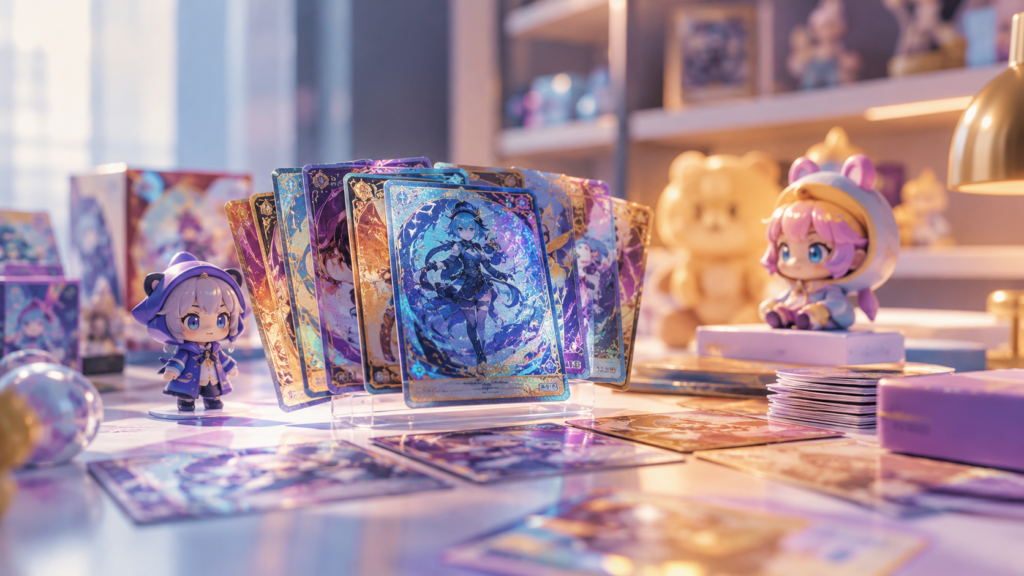
Kayou’s latest financial results illustrate this trend. In 2024, the company generated more than RMB 10 billion in revenue through its collectible card business. This success demonstrates how licensing, collecting experiences and fan communities are becoming important drivers of cultural consumption in China.
An Expansion Project in China? We Can Help You!
Cultural consumption extends beyond products
Today, the value of a collectible card depends on much more than its manufacturing cost.
Licensed IPs, limited editions, rarity and the collecting experience all contribute to the perceived value of a product. For many consumers, purchasing a collectible is also a way to strengthen their connection with a favorite character, franchise or fictional universe.
Meanwhile, livestream sales, collector communities and secondary marketplaces create additional opportunities for interaction. As a result, cultural consumption now extends well beyond the purchasing process itself.
The cultural industry relies increasingly on licensed IPs
Licensed intellectual properties have become a central pillar of the cultural industry.
In recent years, numerous companies have launched licensed products based on popular franchises such as Ultraman, Pokémon, Eggy Party and My Little Pony. Every new IP expands the range of available products, attracts younger consumers and strengthens existing fan communities.
Consequently, licensed IPs no longer serve only to promote products. They also encourage new consumer behaviors and support the emergence of new consumption models.
Companies adopt different growth strategies
Kayou represents one example of this broader market evolution.
Over the past few years, the company has expanded its licensing portfolio while strengthening its distribution network. This strategy has enabled it to diversify its product offering and reach a broader consumer base.
Internationally, companies are pursuing different approaches. Pokémon has built a mature ecosystem around licensed products, official tournaments and player communities. Meanwhile, Pop Mart continues to invest heavily in original IP development to reinforce its own brand identity.
Although these companies follow different strategies, they all place content, intellectual properties and consumer experience at the center of their long-term development.
Cultural consumption creates new experiences
Today, cultural consumption goes far beyond purchasing products.
Collecting, trading and resale platforms continue to enrich the consumer experience. At the same time, cultural products increasingly serve as tools for interaction within fan communities.
Collectible cards, designer toys and licensed merchandise inspired by animation and video games continue to diversify consumer preferences. As a result, these developments are supporting the continued expansion of China’s cultural industry.
Understanding new consumption trends in China
Cultural consumption is playing an increasingly significant role in the evolution of China’s consumer market. Licensed IPs, digital content and changing consumer behavior continue to reshape a wide range of industries.
STAiiRS closely monitors developments in cultural consumption, the cultural industry and emerging consumer trends across China. Through continuous analysis of corporate strategies, consumer behavior and new business models, we help international companies better understand the Chinese market and identify new opportunities for growth.
Recent Comments