

In recent years, brand strategy has become a major priority for many international companies. As markets continue to evolve, businesses are reorganizing their brand portfolios to improve efficiency and strengthen their competitive position. When a brand already has a well-defined identity, an established customer base and a strong international presence, companies often reassess the way it is managed. ASICS recently announced the creation of an independent company to oversee the Onitsuka Tiger business, providing a clear example of this broader trend.
According to ASICS, Onitsuka Tiger will operate under its own executive management team. The brand will also benefit from an independent organizational structure and financial management system. This decision affects not only internal operations, but also international management and the future development of the brand.
An Expansion Project in China? We Can Help You!
Brand strategy shapes business organization
As brands continue to expand, different business units within the same corporate group often develop at different speeds.
When a brand already enjoys strong brand positioning and a significant international presence, companies may decide to adapt their organizational structure. ASICS explained that this restructuring aims to accelerate decision-making, improve operational efficiency and reinforce the brand’s long-term competitiveness.
Today, many international groups are adopting similar approaches. By giving individual brands greater independence, they seek to increase flexibility while allowing each business to pursue its own growth strategy.
Brand positioning drives international expansion
Brand positioning extends well beyond products. It also influences commercial development, retail expansion and international market strategies.
In recent years, Onitsuka Tiger has strengthened its positioning around fashion and lifestyle. At the same time, the company continues to expand its network of directly operated flagship stores. Following the opening of its flagship store in Paris, additional locations are planned in Shanghai, Tokyo, Milan and Seoul. Furthermore, the company intends to re-enter the U.S. market in 2027.
Together, these initiatives illustrate how brand positioning influences strategic decisions related to international business development.
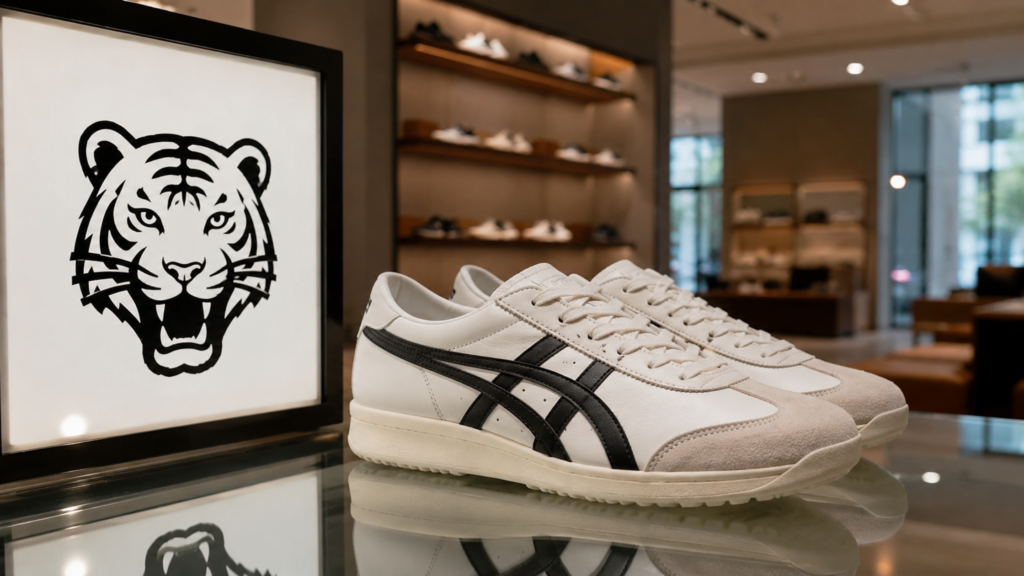
Independent organization supports long-term growth
A brand’s evolution also depends on the way it is organized.
According to ASICS, Onitsuka Tiger will appoint an independent Chief Executive Officer and operate with its own organizational structure and financial reporting system. A dedicated management team will oversee all international operations.
For many companies, this type of organization makes it easier to align management with long-term strategic objectives while improving operational responsiveness and execution.
Brand strategy extends far beyond communication
Today, brand strategy is no longer limited to marketing and communication.
Product development, organizational structure, distribution networks and international management all contribute to building a strong and sustainable brand. As companies continue to reorganize their businesses, these different elements play an increasingly important role in their overall strategy.
The example of Onitsuka Tiger demonstrates how organizational restructuring can support both brand development and international expansion while strengthening long-term competitiveness.
STAiiRS
STAiiRS closely monitors developments in brand strategy, brand positioning and the evolution of international companies operating in China.
Through continuous analysis of consumer trends, brand strategies and market developments, we help international businesses better understand the Chinese market, identify new growth opportunities and adapt their business strategies to an evolving competitive environment.
Recent Comments