
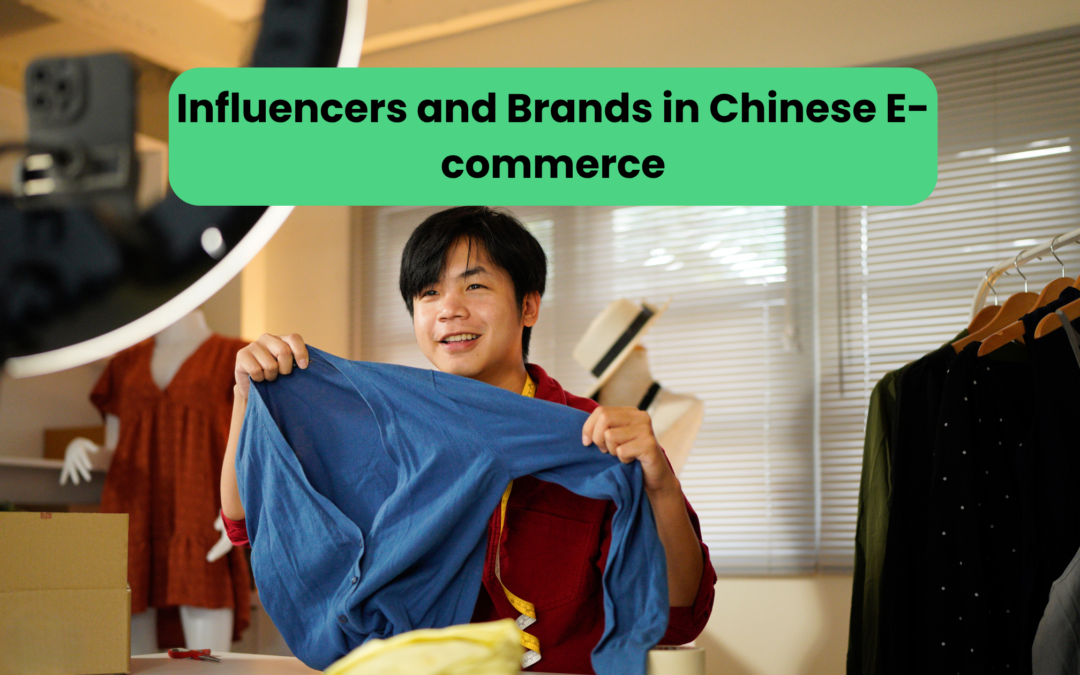
Kuaishou E-commerce has recently reorganized part of its operations, reflecting the new challenges facing social selling in China. Activities related to brands, influencers and different consumer categories are now more clearly separated.
Beyond these internal changes, the reorganization raises an important question for social selling: how should brands balance the influence of creators with long-term brand building?
Live commerce relies heavily on content, creator influence and user trust. However, for an established brand, sales represent only one part of the value a platform can provide.
Brand awareness, consumer relationships and long-term brand equity also matter.
Once a product has been sold, however, who does the consumer really trust: the creator or the brand?
Kuaishou’s reorganization brings this balance between commercial performance and brand development back into focus.
An Expansion Project in China? We Can Help You!
Influencers and Social Selling in China
Live commerce is changing the way consumers evaluate products.
During a livestream, creators do much more than produce content. They introduce products, explain their value and directly influence the decision-making process.
Regular interactions also help creators build stronger relationships of trust with their audiences.
As a result, a consumer’s decision may depend both on their perception of the brand and on the influence of the creator.
This mechanism is particularly valuable for brands that are still relatively unknown. An already engaged audience can make the first encounter with a new product easier.
Influencers therefore provide more than traffic. Content and trust become directly connected to commercial conversion.
Influencer Marketing in China and Brand Value
Working with an influencer can increase visibility and improve conversions. However, these results do not automatically become long-term brand assets.
Much depends on what actually motivates the purchase.
When a creator’s recommendation plays a central role, consumer trust may remain attached primarily to that individual. The brand itself may not gain the same level of recognition.
This difference becomes particularly important over time.
A successful campaign can generate sales. Building a brand, however, depends on other factors, including product recognition, brand recall and repurchase intention.
For this reason, influencer marketing in China cannot be evaluated solely through immediate conversions.
Brands also need to determine whether the attention generated by a campaign genuinely strengthens their positioning and identity.
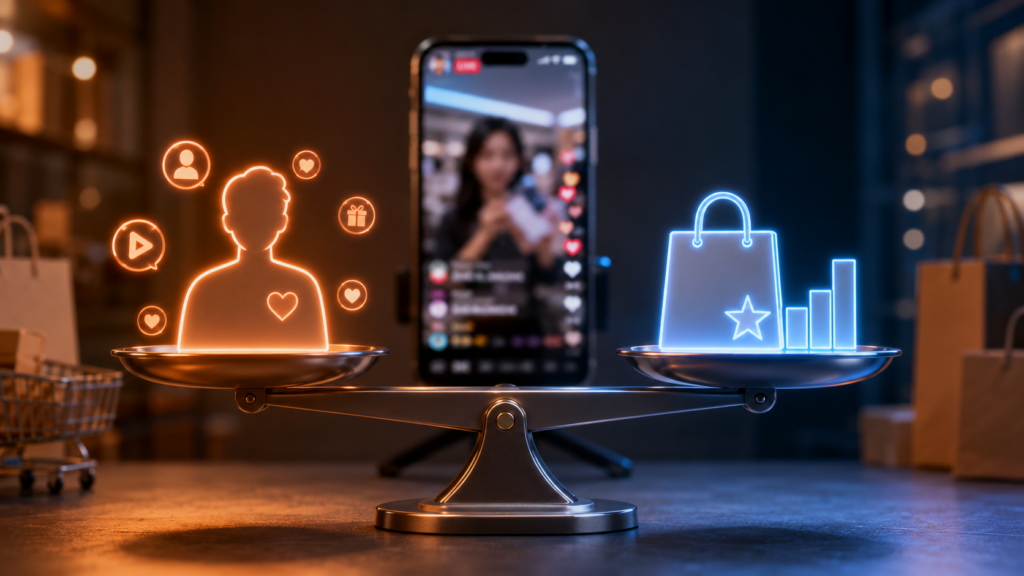
High-Value Products Require Greater Trust
The higher the price of a product, the more information consumers tend to seek before making a decision.
Jewelry, premium home appliances and other high-value products often require more detailed explanations. Quality, perceived value and credibility therefore become particularly important.
Livestreaming provides more room to communicate these elements.
Product demonstrations, detailed presentations and content explaining a product’s origin can help reduce uncertainty. Creator influence can then reinforce the consumer’s confidence.
Choosing an influencer should therefore not depend solely on follower numbers.
Audience profile, editorial positioning, expertise and consistency with the brand universe can all influence campaign performance.
For a marketing agency, creator selection is therefore both a media decision and a matter of brand strategy.
Building a Brand Takes Time
Kuaishou’s new organization also highlights the difference between the objectives of influencers and those of brands.
Creator-led activities connect content, audiences and conversions more directly. Brand management, however, operates over a longer cycle.
It involves positioning, communication, consumer perception and customer relationships.
A sale can happen during a single livestream. Brand equity develops progressively over time.
Mature brands therefore look beyond traffic volume and immediate platform performance.
The quality of the content environment, the ability to reach relevant audiences and opportunities for long-term development also influence their decisions.
The challenge is to combine commercial performance with sustainable brand value.
What Makes Social Selling in China Different?
The development of China’s social commerce ecosystem relies heavily on the integration of content and transactions.
During a livestream or short video, product discovery, presentation, interaction and purchase can happen within a very short period.
Social selling in China therefore significantly shortens the journey from content to conversion.
Within this model, creators are no longer simply communication channels. They participate in product discovery, decision-making and the transaction itself.
However, this efficiency also creates another challenge for brands.
If attention and trust remain concentrated mainly on the creator, sales can increase without significantly strengthening brand awareness.
Creator influence and branded content therefore need to work together rather than replace one another.
How Can Influencers and Brands Work Together?
Influencer marketing and brand building do not pursue exactly the same objectives, but they can complement each other.
Creators use content and their relationship with audiences to support discovery and conversion. Brands, meanwhile, build more lasting relationships through their products, positioning and communication.
The real challenge lies in connecting these two stages.
When creator content communicates the value of a product effectively, the post-purchase experience can reinforce that first impression.
In this way, the influence generated during a campaign can gradually contribute to long-term brand value.
By contrast, a collaboration focused entirely on sales risks remaining a short-term acquisition tool.
A strategy for influencer marketing in China should therefore consider what consumers remember about the brand after conversion, not just how many purchases the campaign generates.
How Is Kuaishou Balancing Influencers and Brands?
Kuaishou’s reorganization does not reduce the importance of its creator ecosystem.
Livestreams, content and community relationships remain central to its e-commerce activities. However, the development of brand-focused business now requires stronger coordination with these existing strengths.
Brands want sales, but they also need an environment that supports communication and long-term development.
Kuaishou must therefore preserve the commercial efficiency of its model while creating more room for brand building.
This shift also deserves attention from companies developing social selling in China.
Influencers can accelerate product discovery and purchasing decisions. Over the longer term, however, growth depends on a brand’s ability to transform external influence into its own brand equity.
STAiiRS helps international brands turn influence in China into sustainable brand value.
Recent Comments