
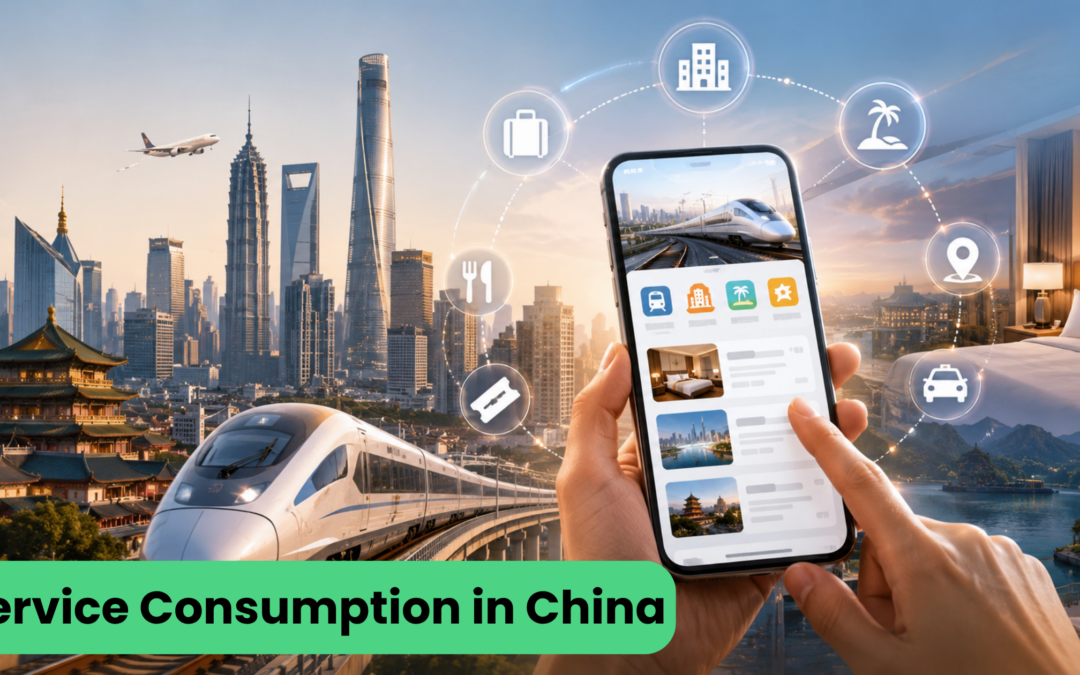
Service Consumption in China is entering a new stage of development. For many years, 12306, China’s official railway ticketing platform, had one primary function: helping travellers buy train tickets. However, in recent years, the platform has gradually expanded into hotel bookings and tourism services.
Meanwhile, companies such as Ctrip, Tongcheng, and Fliggy continue to broaden their offerings far beyond transportation.
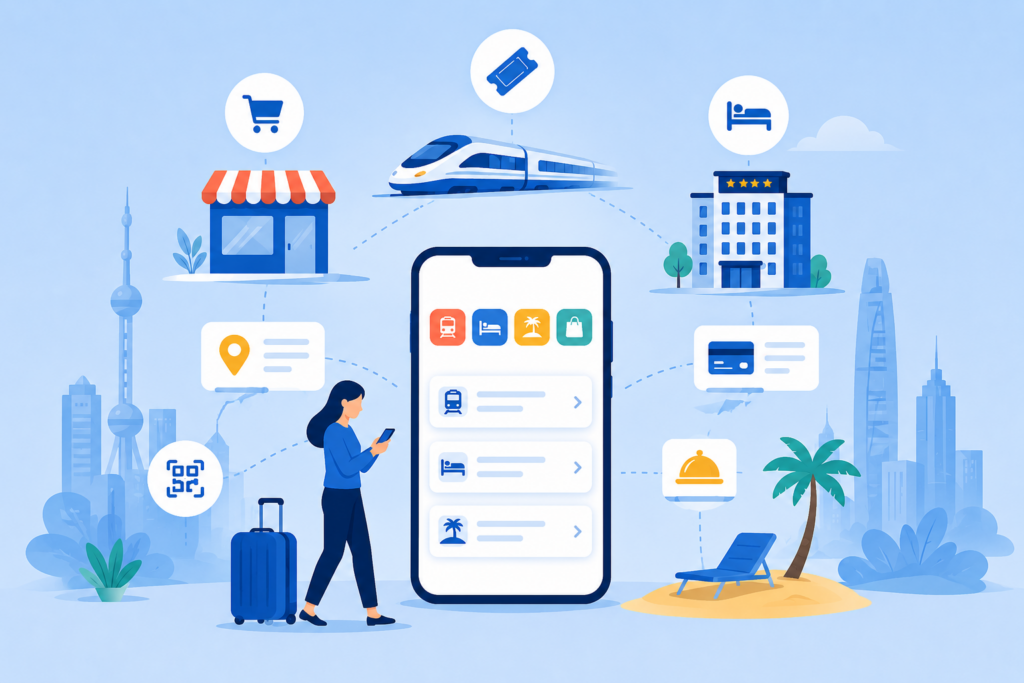
As a result, a wider trend is emerging across China’s service market. Rather than providing a single service, platforms now aim to build complete ecosystems that satisfy multiple user needs within one digital environment.
An Expansion Project in China? We Can Help You!
Why Are Platforms Expanding Their Service Ecosystems?
For many consumers, a trip involves much more than buying a train ticket.
Booking accommodation, planning an itinerary, purchasing attraction tickets, and accessing local services have become part of one connected experience.
Therefore, platforms increasingly bring these services together in a single application.
This strategy is not limited to travel companies. 12306 is following the same direction by gradually adding accommodation and tourism services.
Consequently, competition no longer focuses on one product or one function. Instead, companies compete across the entire customer journey.
Why Do Train Tickets Remain a Strategic Entry Point?
Although hotels and tourism generate higher commercial value, train tickets often represent the first interaction between platforms and users.
When people plan a trip, they usually need accommodation and additional travel services. Therefore, travel platforms view transportation as the gateway to wider consumer spending.
For this reason, companies continue to invest heavily in railway-related services. Once users enter the platform, companies can recommend additional products and services that match their travel plans.
As a result, train tickets now serve a much broader purpose. They have become the starting point for a wide range of travel-related services.
How Is Competition Changing in Service Consumption in China?
As platforms continue to expand their ecosystems, the boundaries between their businesses are becoming less distinct.
In the past, 12306 focused mainly on railway ticketing, while travel platforms specialised in accommodation and tourism. Today, these markets are beginning to overlap.
On one hand, 12306 benefits from a massive user base and strong public trust. On the other hand, private platforms continue to broaden their services to strengthen customer loyalty.
As a result, Service Consumption in China is entering a new competitive phase. Companies no longer compete only for user traffic. Instead, they compete by delivering smoother, more complete, and more convenient customer experiences.
Understanding the Future of China’s Service Market
STAiiRS closely monitors Service Consumption in China, the evolution of digital services, and the transformation of China’s service market to help international companies better understand changes across the Chinese market.
As consumer behaviour continues to evolve, platforms are integrating a growing number of services into unified digital ecosystems. Consequently, this trend is likely to reshape the future of China’s service industry.
For businesses entering the Chinese market, understanding Service Consumption in China is becoming increasingly important. Companies that create seamless, connected service experiences will be better positioned to capture future growth opportunities.
Recent Comments