
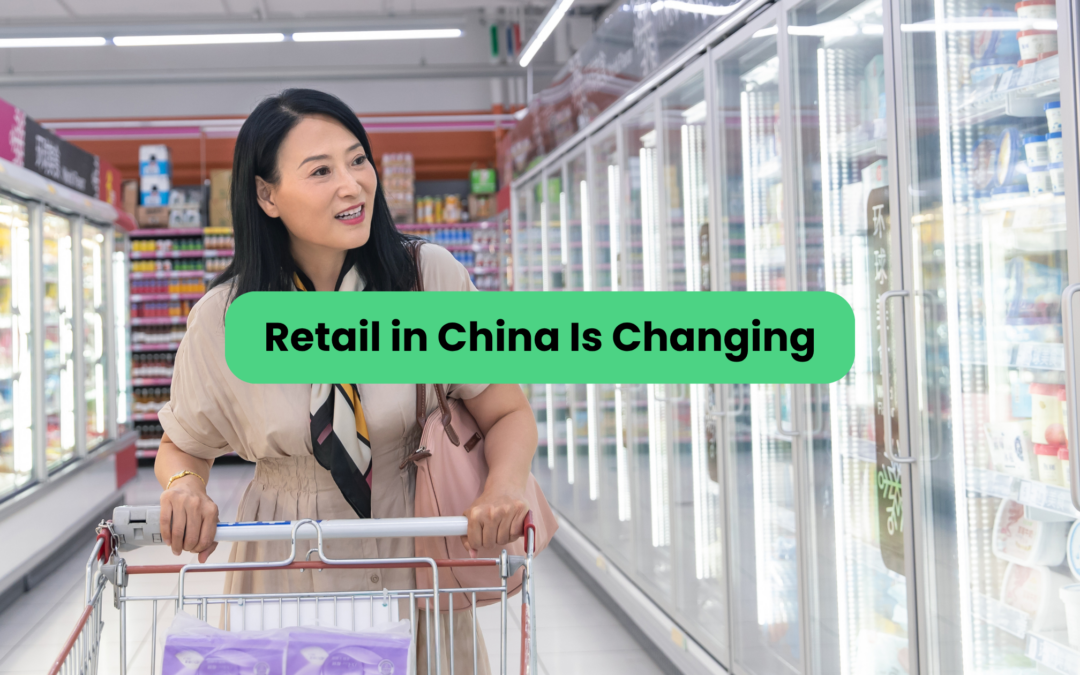
Retail in China continues to evolve at a rapid pace. Walmart China remains one of the country’s leading retailers. Sam’s Club continues to expand through its membership model, private-label products and efficient supply chain.
At the same time, new competitors are following very different strategies. Hema Fresh focuses on fresh food and omnichannel retail. ALDI continues to strengthen its hard-discount positioning. Costco expands its membership-based model, while value retailers develop new formats to meet different consumer needs.
The key question is no longer whether Walmart remains a leader. Instead, it is why competition continues to intensify despite its strong market position.
An Expansion Project in China? We Can Help You!
Retail in China is putting even market leaders under pressure
Being number one never guarantees future growth.
In recent years, much of Walmart China’s success has been driven by Sam’s Club. Its membership model, private-label products and supply chain management have created a strong competitive advantage.
However, relying heavily on a single business model also increases risk. Changes in consumer behavior and the arrival of new retail formats can have a greater impact on future growth.
For international brands, this shows that market leadership is valuable, but it does not guarantee long-term success. Even industry leaders must continue adapting their strategies.
Retail in China is evolving in different directions
One of the biggest changes in Retail in China is that new competitors are no longer trying to copy Walmart’s business model.
Hema Fresh continues to expand its omnichannel strategy around fresh food. ALDI strengthens its hard-discount positioning. Costco focuses on member loyalty, while value retailers continue expanding their product ranges to meet more everyday needs.
Although these companies follow different strategies, they are all contributing to the transformation of the China retail market.
From a consulting perspective, competition is no longer simply between retailers. Different business models are now competing to meet changing consumer expectations.
As a result, Walmart is no longer competing against a single rival. It is competing against a wide range of retailers that are gradually redefining market standards.
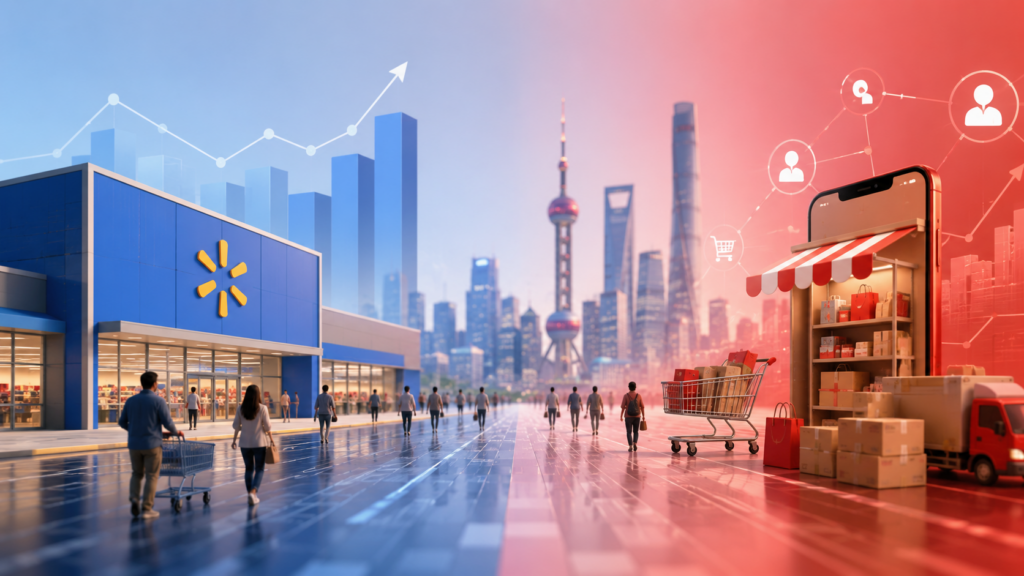
Consumers are redefining value
Retail transformation is often explained by innovations introduced by retailers.
In reality, consumers play an equally important role.
For many years, hypermarkets attracted shoppers through product variety, large stores and one-stop shopping. Today, consumer expectations have become much more diverse. Some shoppers look for exclusive products through membership programs. Others prioritize affordable prices close to home. Many also expect a seamless experience between physical stores and delivery services.
This explains why different retail formats can now grow at the same time.
Consumers have not abandoned quality or price. Instead, they evaluate value using a much broader range of criteria than before.
Supply chain remains a key competitive advantage
Retail models may evolve, but supply chains remain at the heart of competitiveness.
Sam’s Club relies on its private-label products. Hema Fresh continues to strengthen its omnichannel logistics. Hard-discount retailers focus on supply chain efficiency to control costs. Although their strategies differ, all of them depend on strong logistics operations.
For consumers, these systems often remain invisible. However, the shopping experience depends directly on them. Out-of-stock products, inconsistent quality or delivery delays can quickly undermine trust in a retailer.
In Retail in China, supply chains are no longer just an operational advantage. They have become part of the brand promise and a key source of competitive differentiation.
A new phase for Retail in China
China’s retail industry has gone through several waves of transformation.
Hypermarkets dominated the market for many years before membership-based retailers gained momentum. More recently, omnichannel retail, hard-discount stores and new neighborhood retail formats have continued to reshape consumer behavior.
This evolution shows that no business model can maintain a competitive advantage forever.
Today, retailers no longer compete only through store size or store numbers. Operational efficiency, customer experience, innovation and a deep understanding of consumer expectations have become equally important.
The challenge is no longer to identify the next market leader. It is to understand which retail models are best positioned to meet changing consumer needs.
What does this mean for international brands?
The story of Walmart China goes far beyond the development of a single retailer.
It highlights how the China retail market continues to evolve. Consumers now have more choices, retail formats continue to diversify and each channel serves different purchasing needs.
For international brands, choosing a retail partner is no longer enough. It is equally important to understand the role of each distribution channel. Every retail format targets different consumers and supports different business objectives.
From the perspective of a China market consultancy, successful strategies rarely rely on a single distribution channel. Companies that succeed usually adapt their approach to their positioning, products and target customers.
Conclusion
Walmart China remains one of the leading retailers in the market today.
However, its development also reflects a broader reality. Retail in China has entered a new phase. Retailers are no longer differentiated only by their size. Their business models, operational efficiency and ability to respond to changing consumer expectations have become the real competitive advantages.
For international brands, the challenge is no longer simply to identify the strongest retailers. It is to understand how different retail models are reshaping the China retail market and creating new opportunities for growth.
At STAiiRS, we help international brands understand the evolution of the China retail market and develop strategies that align with the long-term transformation of China’s retail industry.
Recent Comments