
Over the past few years, Pop Mart has become one of the most recognizable companies in the collectible toy industry. Thanks to the success of LABUBU, the brand has strengthened its international presence while introducing Chinese original IPs to a broader audience. Today, the Pop Mart strategy has become an important example of how Chinese brands build long-term growth through IP development.
At the same time, the market is raising new questions. When a single IP becomes central to a company’s success, how can it continue to grow? How can it create new sources of revenue?
The recent decline in resale prices for several new LABUBU collections, together with adjustments to some of the group’s businesses, has reignited discussions about the Pop Mart strategy. Beyond these events, they highlight the new challenges facing Chinese companies built around intellectual property.
An Expansion Project in China? We Can Help You!
LABUBU continues to drive Pop Mart’s growth
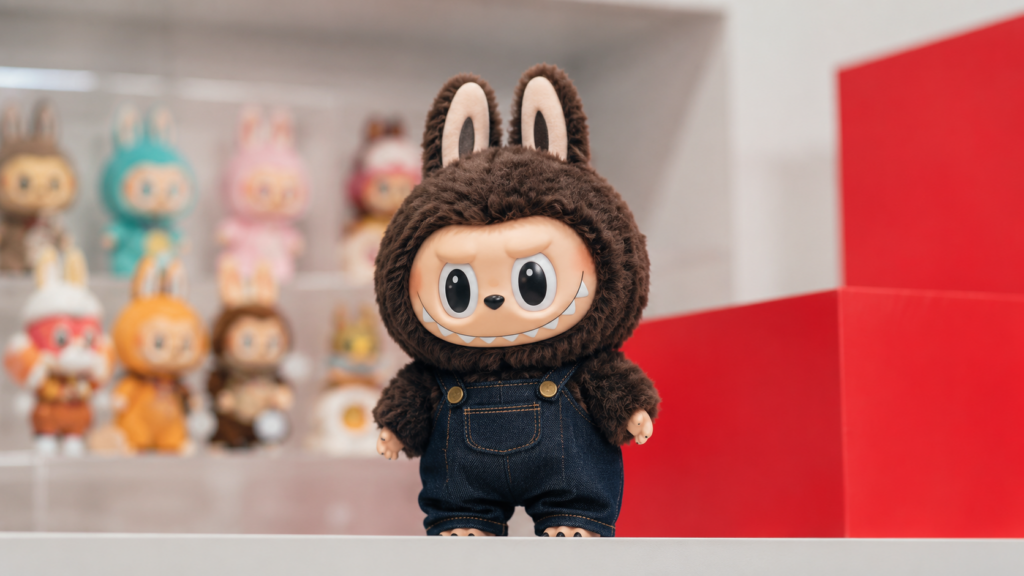
LABUBU remains one of the main drivers of Pop Mart’s growth and one of the strongest examples of how Chinese original IPs are expanding internationally.
According to the company’s latest financial results, THE MONSTERS recorded strong growth, while its contribution to overall revenue continued to increase. This momentum played a major role in Pop Mart’s record performance over the past year.
Meanwhile, LABUBU continues to gain popularity far beyond China. After achieving remarkable success across Asia, the character has gradually expanded into Europe and North America, further strengthening the brand’s global visibility.
Today, LABUBU occupies a central position in Pop Mart’s IP strategy. Its success also highlights the growing importance of original IPs for Chinese brands.
How Pop Mart Strategy Expands Beyond Collectibles
Beyond its collectible figures, Pop Mart continues to expand the universe surrounding its IPs.
In recent years, the company has invested in several new businesses, including video games, theme parks, jewelry and food services. The objective is to create new consumer experiences while increasing the long-term value of its intellectual property.
Not every initiative progresses at the same pace. The closure of one of its mobile games illustrates that each business develops according to its own timeline. Entering a new sector also requires time and continuous investment.
These developments reflect the Pop Mart strategy, which aims to build a broader ecosystem beyond the traditional collectible figure market.
Expanding Beyond Collectible Figures
In recent weeks, discussions surrounding LABUBU have focused mainly on the resale performance of several newly released collections.
At the same time, Pop Mart continues to broaden its product portfolio, launch new collections and develop additional businesses around its leading IPs.
The company’s latest financial results confirm that LABUBU remains a key driver of growth. Meanwhile, Pop Mart continues investing in its brand ecosystem to create new experiences for consumers.
For an IP-driven company, growth no longer depends solely on the success of a single collection. It also relies on the ability to evolve existing IPs while exploring new business models.
Pop Mart’s IP strategy reflects broader industry changes
Pop Mart’s development reflects the transformation taking place across China’s IP market.
In recent years, more and more Chinese brands have focused on building complete ecosystems around their intellectual property. IPs are no longer used simply to sell products. Instead, they serve as the foundation for developing content, experiences and entirely new services.
Against this backdrop, Pop Mart’s journey illustrates how Chinese brands are reshaping their long-term growth strategies. Beyond financial performance, the company demonstrates the increasingly important role that intellectual property plays in brand development and international expansion.
Understanding China’s new growth strategies
Understanding a market also means understanding its growth models.
Pop Mart’s IP strategy shows that long-term commercial success depends on more than a single product or character. Sustainable growth also requires companies to continuously adapt their strategy as markets evolve.
Discover the trends shaping the Chinese market with STAiiRS.
Recent Comments